
TECH & TOOLS
PERPLEXITY AGENCY,
THE ANSWER ENGINE.
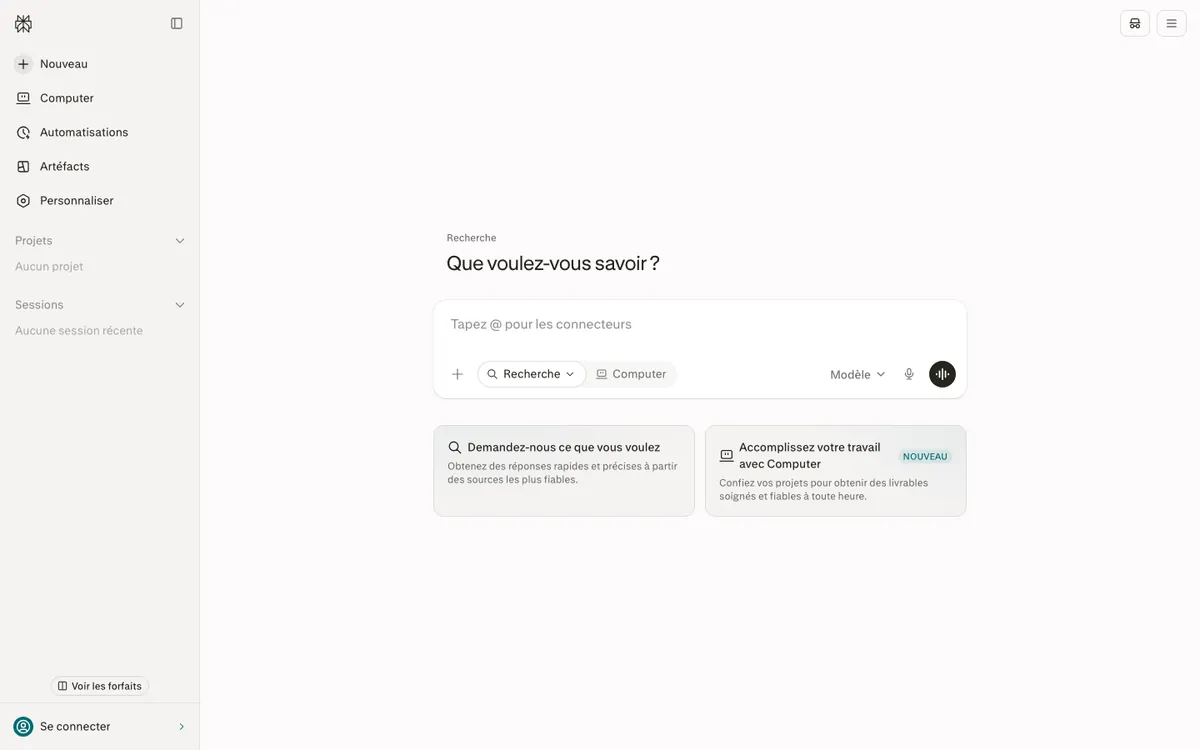
Perplexity calls itself an answer engine: each answer is built on a web search and cites its sources. We read what it says about your brand, and which sites it cites.

PERPLEXITY AT A GLANCE
What is Perplexity?
Perplexity is an AI answer engine, published by Perplexity AI, a San Francisco company founded in 2022. Unlike a classic assistant, it always searches the web and shows its sources, which makes it very readable for an audit.
Related expertise AI listening
Related offer Social Insights
The other tools Talkwalker, Visibrain, YouScan, SoPrism, Radarly, Brandwatch, Sprinklr, Semrush, Google Trends, AnswerThePublic, ChatGPT, GEO, Meta Ads, Google News, Social Blade, Claude, Gemini, Grok
HOW PERPLEXITY ANSWERS
What shapes Perplexity's answer.
- Where do its answers come from?
Perplexity searches the web for every question and shows its sources, numbered, next to the answer. It presents itself as an answer engine more than an assistant.
- What sets it apart
Every answer says where it comes from: you can measure which pages really count for your category. Recent pages, the press and forums weigh heavily.
- What we check
The list of sites cited on your market's questions, the share that talks about you, and the sources your competitors have and you do not.
WHAT IT DOES
What Perplexity lets you analyse.
Sources, in plain sight
Each answer lists the sites used: you see where your brand's image comes from.
What it recommends
The brands cited on your category's questions.
Press and forums
The articles, reviews and discussions that weigh in its answers.
Change over time
The same questions, followed over time.
PERPLEXITY AGENCY
Why work with a Perplexity agency?
Perplexity answers your customers. A Perplexity agency like Licter questions it the way they do, has an analyst read its answers and turns them into a decision, presented to those who decide. Here is how we work.
Perplexity on its own
- A question asked once, by one person
- Answers that change from one try to the next
- No record of the sources cited
- No comparison with your competitors
 Perplexity with Licter
- The same questions asked several times, every month
- The sources cited, collected and sorted
- Your place against your competitors
- What to correct, and where to act
You know what the AI says about you, and why.
- 01
Framing
We start from the decision to make, not from a keyword list: the perimeter follows the question.
- 02
Collection
Queries, sources, languages and periods, set by the consultants who will read the output themselves.
- 03
Reading
An analysis crossed with our other sources, and a recommendation your teams can act on.
WHAT WE DELIVER
What we deliver with Perplexity.
Answer audit
- Your category's key questions
- What the assistant answers
- Your place against competitors
- Errors to correct

Regular tracking
- The same questions every month
- How answers change
- The sources cited
- A note for communication

Assistants compared
- ChatGPT, Claude, Gemini, Perplexity, Grok
- Who cites you, and who does not
- Differences in what they say
- GEO priorities

USE CASES
Perplexity: the use cases where it counts.
Each card leads to the use case it contributes to.

LIMITS AND COMPLEMENTS
The limits of Perplexity, and how we make up for them.
! Limit
Answers that vary
The same question does not always get the same answer: we ask each question several times and compare.
Perplexity What we make up for
! Limit
Sources picked by the tool
Perplexity picks its sources by its own criteria: a missing site does not mean a useless one.
Perplexity What we make up for
+ We cross it with
ChatGPT
The brands cited on your category's questions, and in which order.
 ChatGPT See the page ↗



PERPLEXITY, IN DETAIL
Your brand in Perplexity: the sources it cites
Written by Antoine Khaitrine and Adrien Krebs, co-founders of Licter · updated 12 October 2026
How Perplexity builds an answer
Perplexity builds each answer from a web search, run at the moment the question is asked. According to its help center, it first interprets the question, then searches for articles, websites and journals, and summarises what it found. Each answer carries numbered citations that link to the original pages.
Perplexity does not rely on a single AI model. Subscribers can choose the one that writes the answer, among them its own model, Sonar, and models from OpenAI, Anthropic or Google. The conversation also keeps the context of previous questions. Two people asking the same question therefore do not necessarily get the same answer.
Which sources Perplexity puts forward
The sources Perplexity puts forward are, by its own account, recognised news outlets, academic publications and established sites. Its advanced search, Pro Search, also draws on forums and videos, and users can restrict it to certain content, such as academic publications or finance. These categories remain broad: they do not say which sites count in your market.
The list that matters is therefore measured on your own questions. On Perplexity, recent pages, the press and forums weigh heavily, but only a record on your category says which ones count for you. Perplexity picks its sources by its own criteria: a site missing from its answers is not, for all that, a site that is useless to your customers.
PerplexityBot and Perplexity-User: the two crawlers to know
PerplexityBot and Perplexity-User are the two agents through which Perplexity visits sites. PerplexityBot is used to surface and link sites in Perplexity's results; the publisher states that it does not collect content to train AI models. It is set in the robots.txt file, and Perplexity recommends allowing it for a site to appear in its results.
Perplexity-User, for its part, visits a page when a user asks a question, to help answer it and cite a link. Since the visit is requested by a person, Perplexity states that this agent generally ignores robots.txt. Each setting is independent and can take up to 24 hours to apply. A web application firewall can also block these crawlers: a point to check with your technical teams.
What to do if Perplexity's answer is unfavourable to you
If Perplexity's answer is unfavourable to you, the first thing to read is its list of sources. An error, a harsh judgement or outdated information usually comes from a specific page: an old article, a comparison never updated, a forum thread. Nobody can change an AI's answer directly; you can, however, act on the pages it cites.
You then need to correct or complete these sources: your site first, with clear and current information, then the press and reference pages. Since Perplexity searches on every question, a new or corrected page can be picked up as soon as it is found, without waiting for a new model. Nothing is guaranteed for all that: you act on the sources, then measure whether the answer changes.
Why the sources Perplexity cites can be measured
The sources Perplexity cites can be measured because they are shown, numbered, next to each answer. An assistant answering from memory leaves you to guess where what it says comes from; Perplexity shows it. You can therefore record the sites cited, count how often each one comes back on your category's questions, and see which ones talk about you.
This measurement only makes sense over several tries and over time. The same question does not always give the same answer, nor the same list of sources. We therefore ask each question several times, every month, then record and sort the sources cited. A page that comes back on every try weighs more than a page that appeared only once.
How to find out whether Perplexity cites your site
To find out whether Perplexity cites your site, you have to ask it your customers' questions and read the numbered sources, not just the text. Two situations differ: your brand is named in the answer, or your site is among the sources. You can be cited without being named, and named on the basis of pages written by others.
The record covers three families of questions: choice questions, such as "which brand for this need?", questions about your brand and comparisons with a competitor. For each one, you note the brands cited, their order and the sites given as sources. It is better to ask each question in a new thread, with no context, like a customer discovering your category.
What your competitors have in Perplexity, and you do not
What your competitors have in Perplexity and you do not can be read in its sources. On a choice question, it cites a few brands and relies on specific pages for each one. By comparing the sources that name a competitor with those that name you, you see where it is present and you are absent: a comparison article, a press article, a forum discussion, a review site.
This gap is often more useful than an overall score, because it points to real pages rather than an impression. It also shows newcomers: a brand that enters the sources from one month to the next, and the pages that brought it in. It is the list of your competitors' sources that you do not have, and it is followed over time.
What Perplexity tracking delivers
Perplexity tracking first delivers an audit of the answers: your category's key questions, what Perplexity answers, your place against competitors and the errors to correct. The same questions are then asked again every month, with how the answers change, the sources cited and a note for communications. Licter does not produce the content; your teams or your agencies do.
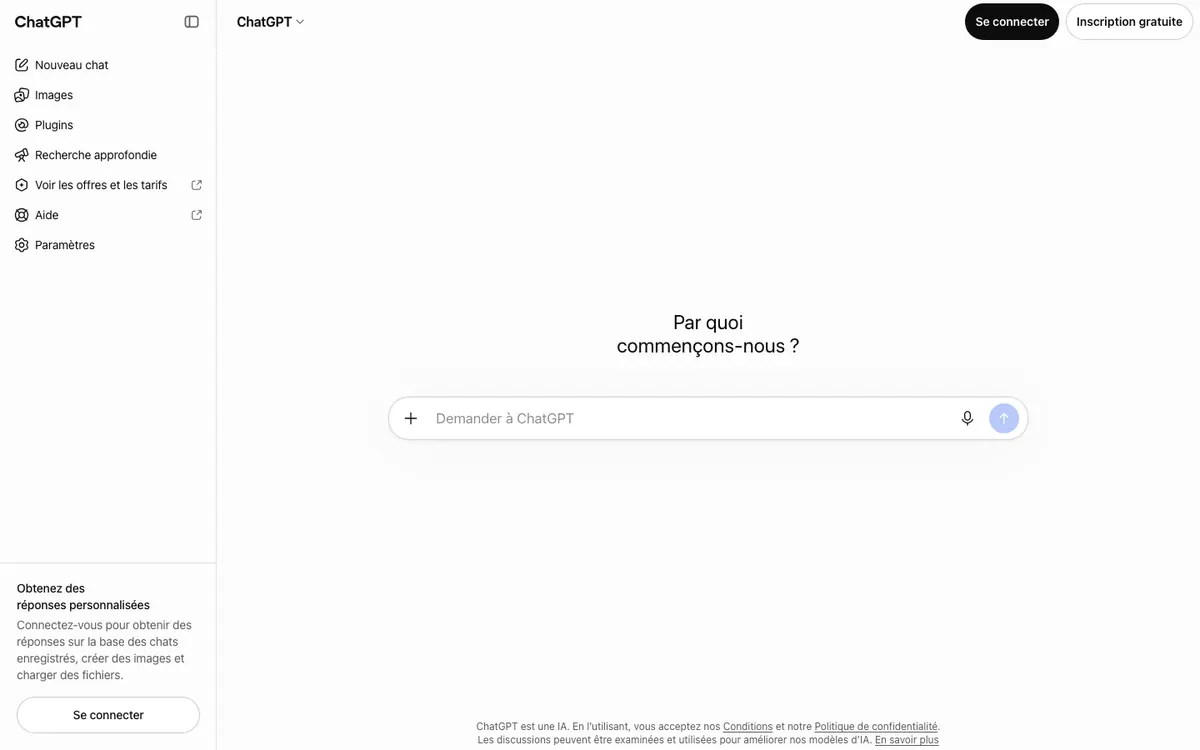
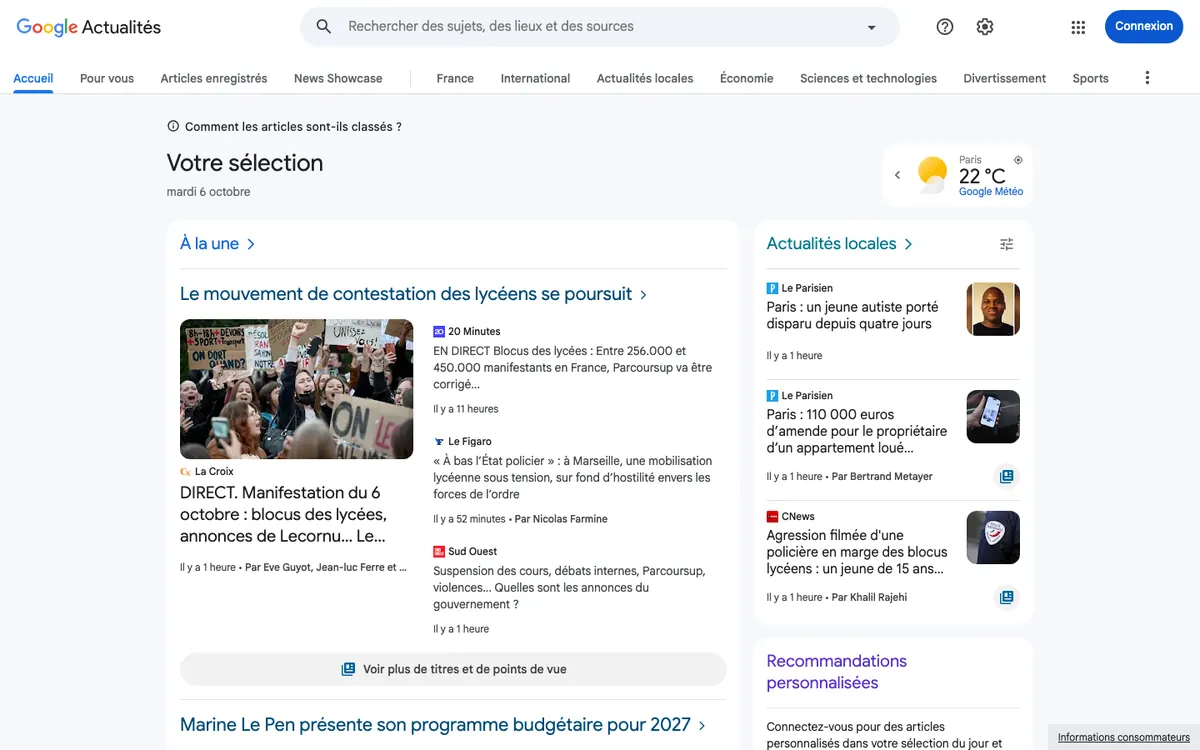
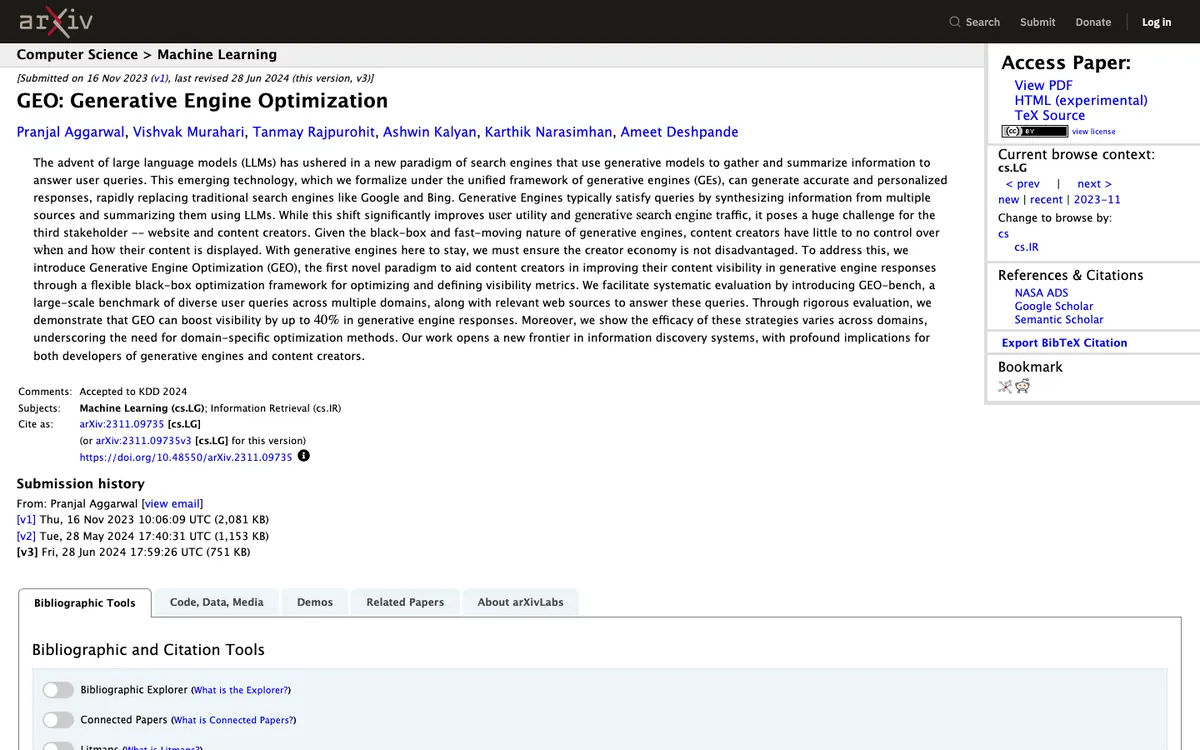
Perplexity is not read on its own. We compare its answers with those of ChatGPT, Claude, Gemini and Grok on the same questions, and cross it with Google News for the press. An audit shows what the assistant answers, not how many people ask it these questions: to estimate that, it is crossed with search listening. No client data is sent to the AI.
Sources Perplexity · How does Perplexity work?, Perplexity · What is Pro Search?, Perplexity · What is Perplexity?, Perplexity · Perplexity crawlers
FAQ
Frequently asked questions about Perplexity.
Is Licter a Perplexity agency?
Yes: Perplexity is a tool anyone can use; what we bring is the method, the reading and the cross-check with other sources. Licter is not tied to its publisher; we are an independent consultancy.
Why is Perplexity useful for an audit?
Because it shows its sources with every answer: you know which sites to act on.
Do you send our data to the AI?
No. We ask public questions; no client data is sent.
TIME TO ACT
Looking for a Perplexity agency?
Send us the question. If another tool answers it better, we will tell you: we use 19.
NOTED, A CONSULTANT GETS BACK TO YOU WITHIN 30 MINUTES, ON WEEKDAYS FROM 9AM TO 7PM