
TECH & TOOLS
CLAUDE AGENCY,
WHAT CLAUDE SAYS ABOUT YOU.
Claude, Anthropic's assistant, is increasingly used at work to look things up, compare and write. We read what it answers about your brand and your category.

CLAUDE AT A GLANCE
What is Claude?
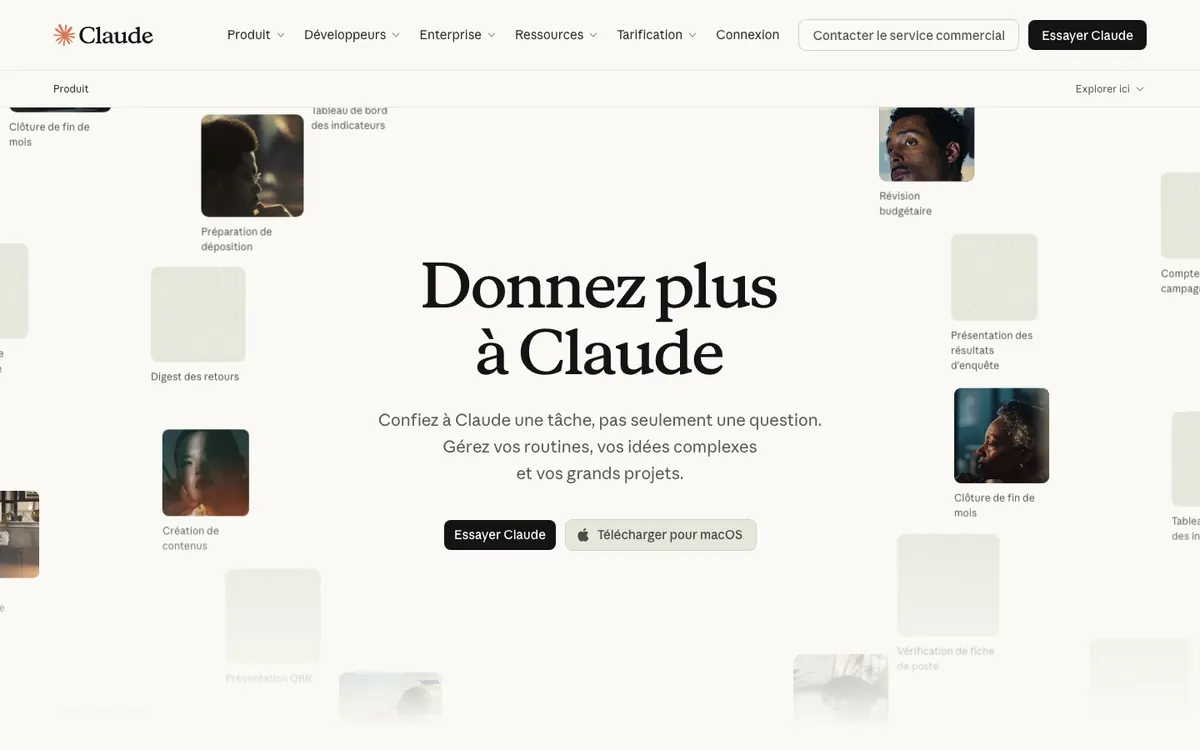
Claude is the conversational assistant of Anthropic, an AI company based in San Francisco, launched in March 2023. It can search the web and cite its sources. Like ChatGPT, it is a source of opinion in its own right, to be audited.
Related expertise AI listening
Related offer Social Insights
The other tools Talkwalker, Visibrain, YouScan, SoPrism, Radarly, Brandwatch, Sprinklr, Semrush, Google Trends, AnswerThePublic, ChatGPT, GEO, Meta Ads, Google News, Social Blade, Gemini, Perplexity, Grok
HOW CLAUDE ANSWERS
What shapes Claude's answer.
- Where do its answers come from?
Claude, Anthropic's assistant, answers first from its training data. Since 2025 it can also search the web; it then cites the pages it read.
- What sets it apart
It is widely used at work, to write, analyse and prepare decisions: its answers reach buyers, analysts and journalists. It readily says what it does not know: a poorly documented brand is more often missing than misdescribed.
- What we check
Whether Claude knows your brand without searching, and what it says when it searches. An absence is fixed through public documentation: your site, the press, reference pages.
WHAT IT DOES
What Claude lets you analyse.
What Claude recommends
The brands cited on your category's questions, and in which order.
The sources cited
The sites and articles it relies on when it searches the web.
Errors
False or outdated information about your brand.
A professional audience
An assistant widely used at work: what it says weighs on decision-makers.
CLAUDE AGENCY
Why work with a Claude agency?
Claude answers your customers. A Claude agency like Licter questions it the way they do, has an analyst read its answers and turns them into a decision, presented to those who decide. Here is how we work.
Claude on its own
- A question asked once, by one person
- Answers that change from one try to the next
- No record of the sources cited
- No comparison with your competitors
 Claude with Licter
- The same questions asked several times, every month
- The sources cited, collected and sorted
- Your place against your competitors
- What to correct, and where to act
You know what the AI says about you, and why.
- 01
Framing
We start from the decision to make, not from a keyword list: the perimeter follows the question.
- 02
Collection
Queries, sources, languages and periods, set by the consultants who will read the output themselves.
- 03
Reading
An analysis crossed with our other sources, and a recommendation your teams can act on.
WHAT WE DELIVER
What we deliver with Claude.
Answer audit
- Your category's key questions
- What the assistant answers
- Your place against competitors
- Errors to correct

Regular tracking
- The same questions every month
- How answers change
- The sources cited
- A note for communication

Assistants compared
- ChatGPT, Claude, Gemini, Perplexity, Grok
- Who cites you, and who does not
- Differences in what they say
- GEO priorities

USE CASES
Claude: the use cases where it counts.
Each card leads to the use case it contributes to.

LIMITS AND COMPLEMENTS
The limits of Claude, and how we make up for them.
! Limit
Answers that vary
The same question does not always get the same answer: we ask each question several times and compare.
Claude What we make up for
! Limit
It is not listening
Claude does not read the social conversation: it completes social listening, it does not replace it.
Claude What we make up for
+ We cross it with
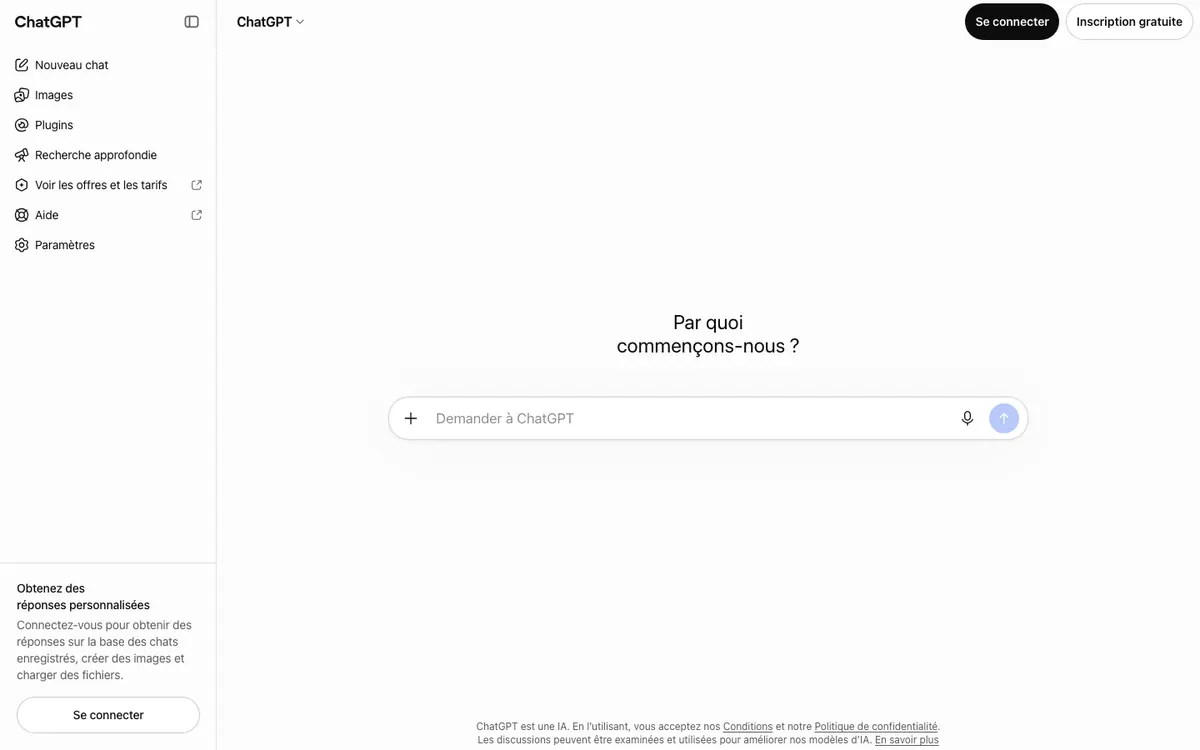
ChatGPT
The brands cited on your category's questions, and in which order.
 ChatGPT See the page ↗
+ We cross it with
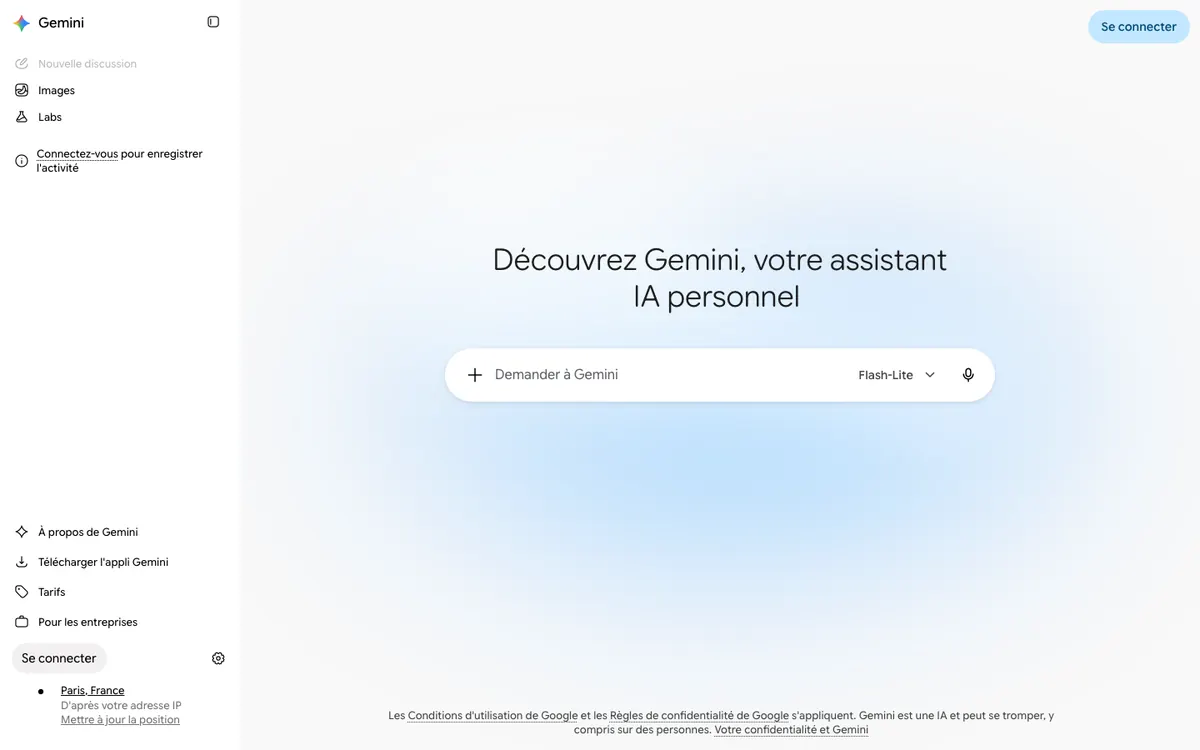
Gemini
The brands cited on your questions, and in which order.
 Gemini See the page ↗

CLAUDE, IN DETAIL
Claude and your brand: what it knows, what it looks up
Written by Antoine Khaitrine and Adrien Krebs, co-founders of Licter · updated 12 October 2026
How do I find out what Claude says about my brand?
To find out what Claude says about your brand, you have to question it the way your customers would, and your business customers in particular. You ask it choice questions, questions about the brand itself and comparisons with a named competitor. It is on choice questions that it recommends and rules out. Each question is asked several times: a single answer supports no conclusion.
The answer also depends on the account asking. Since September 2025, Claude can remember its users' projects and preferences, first on the Team and Enterprise plans. Incognito mode, open to everyone, starts from a blank page: it is the closest thing to the view of a customer discovering your category.
Where Claude gets what it knows about a brand
What Claude knows about a brand without searching comes from its training data. Anthropic describes it as a mix of public information on the internet, public and private datasets, and other sources. The company states that it does not access password-protected pages: a customer area or a restricted document does not get in that way.
This data stops at a date. For each model, Anthropic publishes a reliable knowledge cutoff: the date up to which what it knows is most complete and most reliable. After that date, what it knows is more partial. A name change, a new product or a recent acquisition can therefore escape it as long as it does not search the web.
Who uses Claude, and why it matters
Claude is mostly used for work. In February 2025, Anthropic published the analysis of about one million anonymised conversations: computing tasks came first, ahead of writing and editing. Since 2024, Anthropic has also offered an Enterprise plan for organisations, with shared internal documents and role-based access rights.
That is what sets Claude apart for a brand. It is used to write, analyse and prepare decisions: its answers reach buyers, analysts and journalists. A purchasing memo or a market study prepared with it can repeat what it says about you, without your knowing. Your place in its answers therefore weighs on decision makers.
What to do if Claude gets your brand wrong, or ignores it
If Claude gets your brand wrong or ignores it, rewording the question changes nothing. Nobody controls its answer, and it cannot be changed directly. You start by looking for the cause: an old page cited when it searches, information missing from public sources, or a crawler blocked on your site. When it searches, the sources it shows often point the way.
You then act on public documentation: your site, with clear and current information, then the press and reference pages. When Claude searches, a corrected page can be picked up as soon as it finds it. When it answers from memory, nothing moves before a new model. Licter does not produce this content; your teams or your agencies do.
Claude with and without web search
Claude with and without web search are two distinct sources of answers. Search was launched in March 2025 for paying subscribers in the United States, then opened to all plans, worldwide, in May 2025. When it searches, Claude cites the pages it read: you can then see where what it states comes from. Without search, no source is shown.
Depending on the interface, search is turned on by hand, or Claude starts it on its own when it seems useful. On the Team and Enterprise plans, an administrator must first allow it for the whole organisation. A buyer can therefore question Claude without web search and get an answer from memory only. That is why we ask each question in both modes: the gap shows what is outdated in its memory.
Why Claude sometimes answers "I don't know"
Claude sometimes answers "I don't know", and that is no accident. The principles Anthropic published to guide its behaviour ask it to acknowledge its uncertainty or lack of knowledge when that is the case, without showing more or less confidence than it has. Faced with a poorly documented brand, it often says it does not know it.
For a brand, this changes the nature of the risk. On Claude, a poorly documented brand is more often missing than misdescribed. An absence makes no noise, but it counts: a better documented competitor is cited in your place. Errors remain possible, as Anthropic acknowledges in its documentation: so you need to check both, the omission and the false information.
ClaudeBot, Claude-SearchBot, Claude-User: Anthropic's crawlers
Anthropic's crawlers are three, each with its own role. ClaudeBot collects content that may be used to train its models. Claude-SearchBot browses the web to improve Claude's search results. Claude-User visits a page when a user asks a question that calls for it. All three follow the instructions in the robots.txt file, where each is named on its own to be allowed or blocked.
Blocking these crawlers does not have the same effect for each one. Blocking ClaudeBot signals that the site's future content should be excluded from training. Blocking Claude-SearchBot or Claude-User can reduce the site's visibility in search answers, according to Anthropic. An old block, set as a precaution, sometimes explains an absence: something to check with your technical teams.
What tracking Claude delivers
Tracking Claude first delivers an audit of its answers: your category's key questions, what it answers with and without web search, your place against competitors and the errors to correct. The same questions are then asked again every month, with the same wording, to follow how the answers and the sources cited evolve. Each finding is tied to the answers recorded.
Claude is also compared with the other assistants, ChatGPT, Gemini, Perplexity and Grok, on the same questions: who cites you, who leaves you out, which differences in discourse appear. This tracking promises no result and does not replace social listening: Claude does not read the social conversation. We ask public questions, without sending any client data.
Sources Anthropic · Memory in Claude, Anthropic · Claude can now search the web, Anthropic · Enable and use web search, Anthropic · Transparency hub, Anthropic · Personal data in model training, Anthropic · Models overview, Anthropic · Claude's constitution, Anthropic · Reduce hallucinations, Anthropic · The Anthropic Economic Index, Anthropic · Claude for Enterprise (2024), Anthropic · Does Anthropic crawl data from the web?
FAQ
Frequently asked questions about Claude.
Is Licter a Claude agency?
Yes: Claude is a tool anyone can use; what we bring is the method, the reading and the cross-check with other sources. Licter is not tied to its publisher; we are an independent consultancy.
Why audit Claude as well as ChatGPT?
Because assistants do not cite the same brands or sources: your place can be good in one and absent in another.
Do you send our data to the AI?
No. We ask public questions; no client data is sent.
TIME TO ACT
Looking for a Claude agency?
Send us the question. If another tool answers it better, we will tell you: we use 19.
NOTED, A CONSULTANT GETS BACK TO YOU WITHIN 30 MINUTES, ON WEEKDAYS FROM 9AM TO 7PM