Audience listening. Who your audiences really are.
We profile communities from what they follow, share and consume: interests, brand affinities, media. Enough to replace a declared persona with observed behaviour.
Get contacted by a consultant Or book a meetingA call with a consultant, on your brand.
- A consultant contacts you within 30 minutes, on weekdays from 9am to 7pm
- Your question framed, with the right sources and tools
- A costed proposal after the call


 A consultant, not a sales team.
Trusted by 50+ organisations · 160+ projects since 2022
WHAT IT PICKS UP
What Audience listening lets you hear.
A community's interests and passions

The brands and media it follows
The overlaps between communities
USE CASES
The questions it answers
Each question leads to the use case where this listening makes the difference.

Further reading Our audience use cases, How Orange reads TikTok, Winning luxury cosmetics
AUDIENCE INTELLIGENCE, IN DETAIL
What to know before you start an audience study.
Written by Antoine Khaitrine and Adrien Krebs, co-founders of Licter · updated 13 October 2026
What is audience intelligence?
Audience intelligence means describing a public from what it does online: the accounts it follows, the content it shares, the brands and media it consumes, the subjects it searches for. The result is not an average, but a map of communities, each with its size, its passions and its channels.
The term covers what is also called audience analysis or a social media audience study. It is also one of the building blocks of consumer intelligence, when the study looks at the consumers of a category. At Licter, we call it audience listening, one of our six listenings. The starting question stays the same: who really are the people you want to reach, beyond what you think you know about them, and where can you find them?
What is consumer intelligence?
Consumer intelligence means studying the consumers of a category from what they leave online: what they say about products, what they search for, the brands and media they follow. It usually crosses social listening, audience intelligence and search data, to answer a market question rather than a brand question. Consumer insights are its output: what you keep from that reading to make a decision.
It differs from a declared market study: nobody is asked anything, we observe what real consumers do and say, continuously. At Licter, a consumer intelligence study starts from a question, for example why a category is losing customers or what a target expects from a product, picks the sources that answer it, and ends with recommendations.
Audience analysis, audience measurement, social listening: what sets them apart
Audience measurement counts: how many people watched a programme, visited a site or follow an account. The native analytics of social networks belong here: they describe your own followers, with some data on age, gender and location. Audience analysis answers another question: who are these people, and what do they do away from you?
Social listening reads what people say about a brand or a subject. The two complement each other: one says what people think of you, the other who they are and what they like. A single study often crosses them, for example to learn what a community found in the panel says about your category, and in which words.
How do you segment an audience from its behaviour?
We start from a reference audience: your customers, your brand's followers, a competitor's, or a population such as a country's 18 to 30 year-olds. The panel brings out the groups that make it up, from what they follow and consume together. We usually get five to eight communities, distinct enough to act on each one.
Each community is then measured. Affinity says how much it likes your brand or your category. Penetration says what share of it you already reach. Opportunity brings the two together: a community that likes you but that you barely reach is often where the budget pays most. The use case Segment your target profiles shows a deliverable of this kind.
An analyst then reads these groups, names them and checks that they make sense for the market. An algorithm groups; it does not understand why. For example, a community of "sports fans" can hide weekend joggers and triathletes, who buy nothing the same way and do not talk on the same networks.
What audience intelligence helps you decide
First, where to put the budget. A segmentation can show that the brief's target is not where the opportunity is strongest, and that an overlooked community already likes the brand without buying it. The choice of platforms, formats and creators follows: a creator is picked for the audience they really reach, not for their follower count.
Then, how to win a new public. The use case Rejuvenate your audiences compares the target generation with the current base, subject by subject and platform by platform, to find the bridges between the two. Comparing your audiences with a competitor's shows in the same way what they reach and you do not, and the angles to go after those publics.
Audience intelligence also feeds product strategy. For HP, in the United States, we built over six months a hybrid segmentation, crossing panel and social data on more than 5,000 criteria, completed with user stories, to segment consumer niches and strengthen product strategy from existing studies.
The limits of audience intelligence
An audience study describes digital behaviour. It reads publics that are active online better than those that are not, and some sources cover only part of the networks: a tool built on Meta's data sees neither TikTok nor Twitch. It says who people are and what they like, not why they buy or give up buying.
It works on groups, never on individuals: that protects privacy, and it is a limit for anyone who would want to target one specific person. Finally, a statistical grouping without a reading remains a table. That is why we cross audience intelligence with social listening, search or your existing studies.
Audience intelligence and personas: what is the difference?
A classic persona is often born in a workshop: a few interviews, sales data, and what the team believes it knows about its customers. It describes a typical person, with an age, a job and assumed motivations. Useful to align a team, it remains declarative, and it ages fast, because nobody tests it against data.
Audience intelligence works the other way round: from observed behaviour to the portrait. It does not look for a typical customer, but for the real groups that make up an audience, and what sets them apart. For example, one public can bring together busy parents, cooking enthusiasts and sports fans, who do not expect the same thing. Personas come out of it, but built on measured criteria.
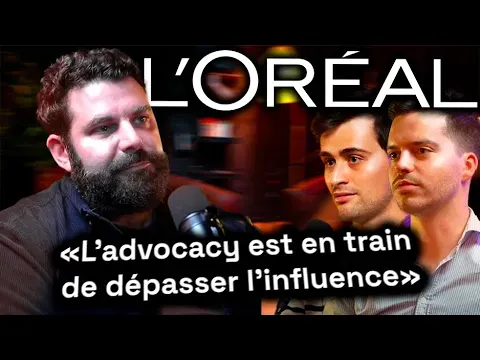
Charles Besson, head of global social listening at L'Oréal, puts it his own way in our Audience First podcast: advocacy is overtaking influence. For a brand, that means looking for communities with several interests, and the advocates who drive them, rather than a target defined by a single criterion.
Consumer intelligence and customer intelligence: what is the difference?
The two terms overlap. Customer intelligence usually starts from your own customers and your data: purchases, customer service, CRM. Consumer intelligence looks at the whole category, customers or not.
In practice, the best studies cross the two: your data says who buys, the conversation and the audiences say why, and what those who do not buy yet are doing. That cross-reading is what we build with you, never working on individual profiles.
What data does an audience study use?
The base is a behavioural panel drawn from social networks, where 5.66 billion active users post (68.7% of the world's population), described by more than 7,000 criteria, including interests, media diet, brand affinities and sociodemographics. This data is aggregated and anonymous: we read groups, never a person. It describes what people already do, with no questionnaire, and so with no declaration bias.
On top of this base come the public conversation, to know who talks about you and your category, and search, to know what each community looks for. Your own data, such as a customer file or an existing study, can be crossed in if you wish, but it is not needed for a first segmentation.
Which tools for audience analysis?
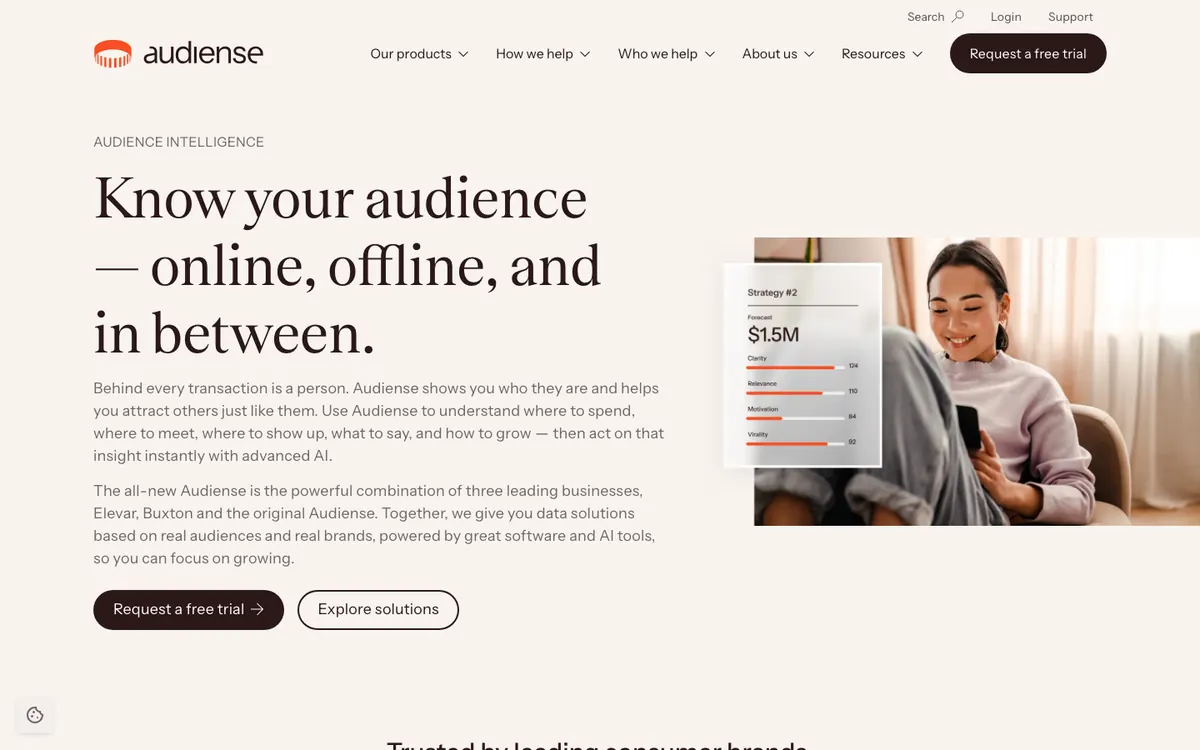
Several families of tools exist side by side. The networks' native analytics describe your followers, platform by platform. Audience analysis tools, such as SoPrism, bought in 2022 by Audiense, profile any audience from aggregated data: interests, affinities, geography. Social listening platforms, finally, describe the people who talk about a subject.
None is enough alone. SoPrism reads Facebook and Instagram, not the other networks, and it says who people are, not what they say. So we cross it with a listening platform such as Talkwalker, with Social Blade to follow followers and views, or with Meta Ads to see competitors' running ads. Our SoPrism page details these limits.
One-off study or ongoing tracking?
A first study answers a precise question: who makes up our audience, where the opportunity lies, how to reach a new generation. A first read takes about ten days, from scoping to readout; a full gap analysis between two audiences takes more like two to three weeks.
But an audience moves: new creators emerge, one platform takes another's place, a community shifts. Reading the same communities again at regular intervals shows whether a media plan really changed anything. In our Social Insights offer, audience studies alternate with campaign reads and benchmarks, driven by the questions of the quarter.
Audience intelligence agency or consultancy: what you buy
With an audience intelligence agency or consultancy, you do not buy access to a profiling tool, but an answer to a marketing question. The choice of sources, the definition of the audiences to compare, the reading of the communities and the recommendation are handled by consultants, who read for themselves what they have set up.
Licter is an independent social data intelligence consultancy: we run SoPrism and 18 other tools without being their publisher, and we pick the source by the question. For a foreign market, the reading goes to analysts who speak the language and know the market. The simplest way to start: a thirty-minute call with a consultant.
Sources Tech.eu · Audiense acquires SoPrism (2022), Audiense · Data sources, CNIL · RGPD, chapitre II : les principes, CNIL · L'intérêt légitime, CNIL · Recommandations aux réutilisateurs de données publiées sur internet, DataReportal · Digital 2026
METHOD
How it runs
- Day 0
Framing
The audiences to profile, and the decision to inform.
- Day 3
Profiling
The behavioural panel brings out the communities.
- Day 7
Analysis
Affinities, media and overlaps, read by an analyst.
- Day 10
Readout
The communities to prioritise, and how to reach them.
Indicative timings for a first read.
LIMITS AND COMPLEMENTS
Its limits, and what completes it.
! Its limit
Audience listening
What these people think of you in particular: that is social listening.
Audience listening What it cannot say on its own


IN THEIR WORDS
They talk about it.
EVERY WAY OF LISTENING
The five other ways of listening.
Frequently asked questions
Frequently asked questions
Audience intelligence or social listening: what is the difference?
Social listening reads what is said about your brand and your market. Audience intelligence, which we call audience listening, describes the people themselves: what they follow, share and consume, whether they talk about you or not. One measures a conversation, the other draws a community; the two often meet in the same study.
Where does the audience data come from?
From public interactions: accounts followed, content shared, engagement. We work on aggregated communities, never on individuals.
Can we compare our audiences with a competitor's?
Yes, and it is often the most telling: what sets your communities apart from theirs, and the ones they reach and you do not.
Is it GDPR-compliant?
Yes, on the basis of legitimate interest (GDPR Article 6(1)(f)). Public does not mean free to use: the CNIL points out that such data remains personal. So we only use public data, aggregated into communities, never individual profiles, and only what the question needs.
What do we do with the results?
A media plan, messages and creators for each community: the readout ends with recommendations.
What do you receive at the end?
An audience profile presented by the consultant who built it, about ten days after framing: the communities that matter, their interests, the brands and media they follow, and which to prioritise.
How much does an audience study cost?
On quotation: the price depends on the scope (brands, markets, languages, sources), the duration and how often you receive deliverables. After a first thirty-minute call, we send a costed proposal.
Let's talk about your audiences.
Leave your email or phone number. A consultant contacts you within 30 minutes, on weekdays from 9am to 7pm, and tells you which model fits.
Already running social listening? Request a diagnostic instead →
- 50+ organisations served
- 160+ projects since 2022
- 20+ languages monitored