 FREE FLASH READ
The topics rising, and the ones fading


Social networks, news, forums and reviews, collected on your perimeter and read by an analyst: volumes, topics, tone, and above all what it means for you.
Your brand's Social listening flash read, free.


 Prepared and read by a consultant, not a robot.
Trusted by 50+ organisations · 160+ projects since 2022
WHAT IT PICKS UP
USE CASES
Each question leads to the use case where this listening makes the difference.
SOCIAL LISTENING, IN DETAIL
Social listening means collecting and analysing what people publish online about a brand, a product, a competitor or a subject: social networks, forums, review sites, blogs and online press. The goal is not to count mentions, but to understand a perception and decide what to do about it.
Where a classic survey asks a few hundred people, social listening observes what thousands say spontaneously, without being asked. That is its strength: observed behaviour rather than a declared answer. It is also its limit: it only reads what is public, and only what people choose to say.
Social media monitoring signals what happens: a mention, a spike, a crisis taking off. It serves to react, often in real time. Social listening goes further: it analyses the conversation over time to explain why it moves, who carries it and what it says about a market.
Both use the same data and the same platforms. The difference lies in the question asked and in the reading. Monitoring answers "did something happen?"; a social listening study answers "what should we conclude, and what should we decide?". For monitoring and crisis management, see our guide to social media monitoring and our Vigie 360 offer.
A brand's reputation: what is said about it, on which subjects, in which tone, and how that evolves against competitors. A campaign: what it changed in the conversation, audience by audience, and what really carried it. A product: what customers like, what irritates them, and the words they use to talk about it.
And a market's trends: the subjects gaining speed, the expectations nobody covers well, the weak signals that announce a shift. In each case, the value is not in the dashboard, but in the decision it lets you make and defend.
From public posts: X, TikTok, Instagram, Facebook, YouTube, LinkedIn, Reddit, and some twenty other networks depending on countries and subjects, including Weibo, Douyin or VK in the markets where they matter. Add forums, review sites, blogs and online press, because a subject keeps travelling from one to the other.
Private messaging, closed accounts and private groups remain out of reach. Coverage also varies by network, as each one regulates access to its data: before every study, we check what is really covered for the question asked. Our network pages detail what each platform lets us read.
It all starts with the question: the decision the study must inform, and what would count as an answer. Then come the perimeter and the queries: brands, products, competitors, markets, languages, and Boolean queries tested to rule out homonyms and noise. It is the most underestimated part, and everything else depends on it.
Then collection and cleaning, on the right sources. Then the reading: an analyst who speaks the market's language qualifies the posts, connects the signals and checks what the tool has classified. Finally the readout: a recommendation presented to the teams concerned, with what supports it and what to follow next.
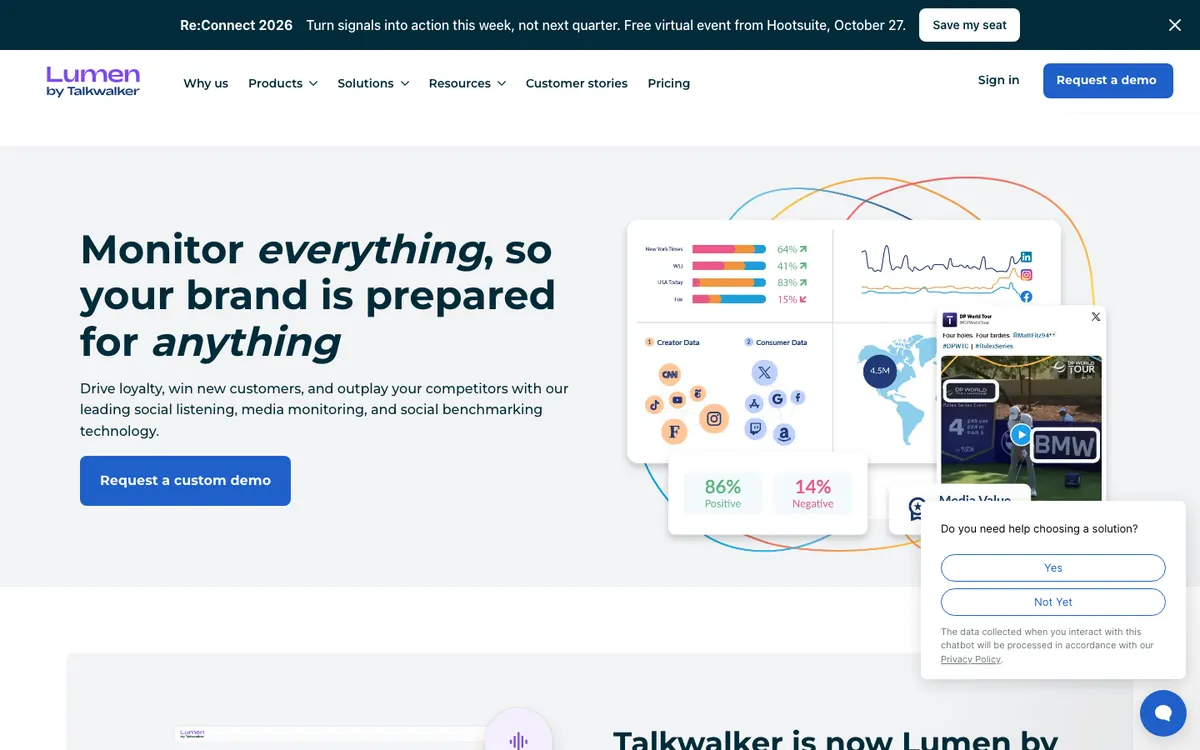
The market counts many social listening platforms: Talkwalker, Brandwatch, Sprinklr, Radarly, YouScan, Visibrain, among others, each with its strengths. Some excel at long history, others at real time, images or audiences. None covers everything, and most questions are answered by crossing two tools.
Above all, a tool collects and sorts; it does not decide. Automatic sentiment gets irony wrong, badly written queries bring back noise, and a volume spike never says why it exists. That is why so many licences stay underused: the software is there, but nobody has the time to make it speak.
With a social listening agency or consultancy, you do not buy access to software, but an answer. The choice of tools, the writing of queries, the reading in the market's language and the recommendation are taken care of. Your teams keep their time for the decision.
Licter is a social data intelligence consultancy: we run the market's platforms without being their publisher, and we pick the tool by the question. If you already have a licence, we can take it over and make it work. A first read takes about ten days, from scoping to readout.
METHOD
The perimeter, the markets, the languages and the sources.
Queries set up, the noise removed.
An analyst reads the topics, the tone and who carries them.
A summary, and what to do with it.
Indicative timings for a first read.
LIMITS AND COMPLEMENTS
!Its limit
Who these people are beyond their post: that is audience listening.
Social listeningWhat it cannot say on its own
+The platform
Broad coverage, over time
 TalkwalkerSee the page↗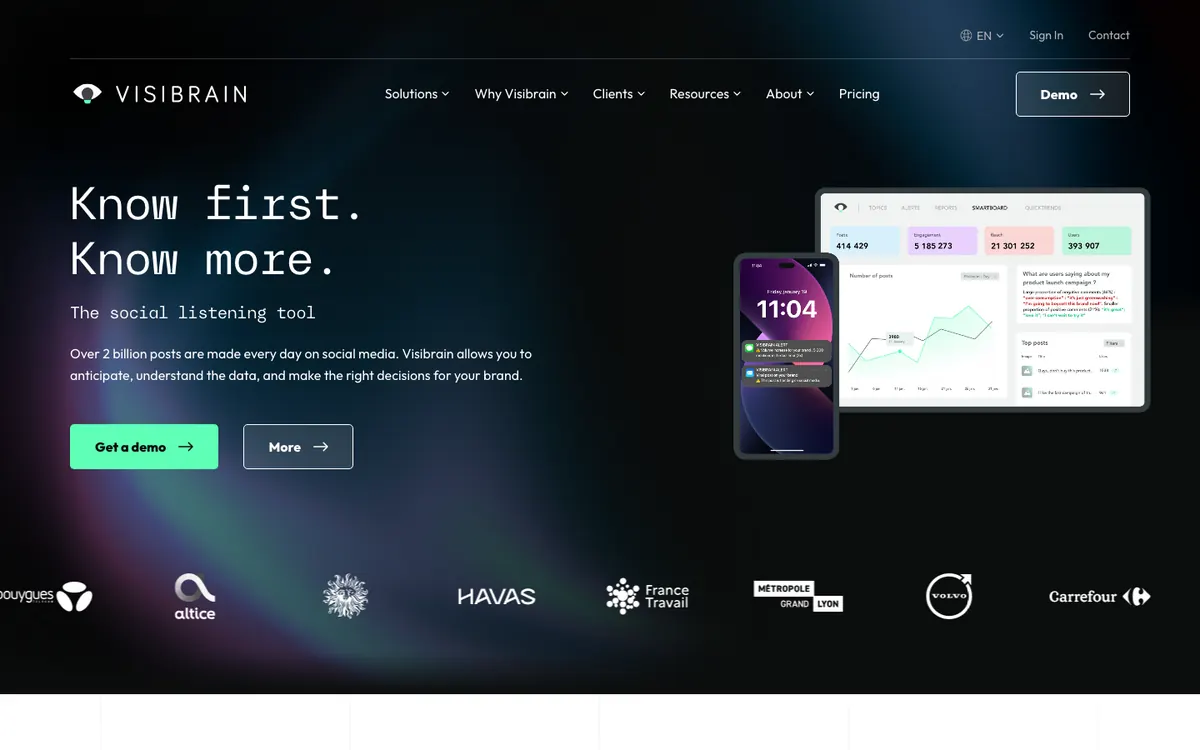
+The platform
Real time and the media
 VisibrainSee the page↗
01In the offer
Studies on demand, read by experts.

02In the offer
Alerted in 15 minutes, 24/7.
IN THEIR WORDS
EVERY WAY OF LISTENING
Frequently asked questions
Social networks, online news, forums, blogs and reviews, in more than twenty languages, depending on the perimeter set with you.
The tool collects. We pick the sources, remove the noise and read the result, to tell you what to do with it.
About a week after framing, faster for an urgent topic.
No. We work with our own platforms. If you have one, we can also take it over and make it speak.
Leave your email or phone number. A consultant calls you back within 30 minutes on weekdays and tells you which model fits.
Already running social listening? Request a diagnostic instead →